At the edge of Europe, where green cliffs meet the foaming ocean, live some of the most recognizable and charming birds of the North – puffins, known in Icelandic as lundi. In everyday speech many travelers simply call them pafins, and under this name they are often remembered.
Although they spend most of the year travelling thousands of kilometers over the Atlantic Ocean, South Iceland is one of the easiest places to see them up close. It’s no coincidence -the cliffs here are gentle, and the cold ocean currents bring plenty of fish without which these small seabirds could not survive.
Small, black… but with a beak you cannot mistake
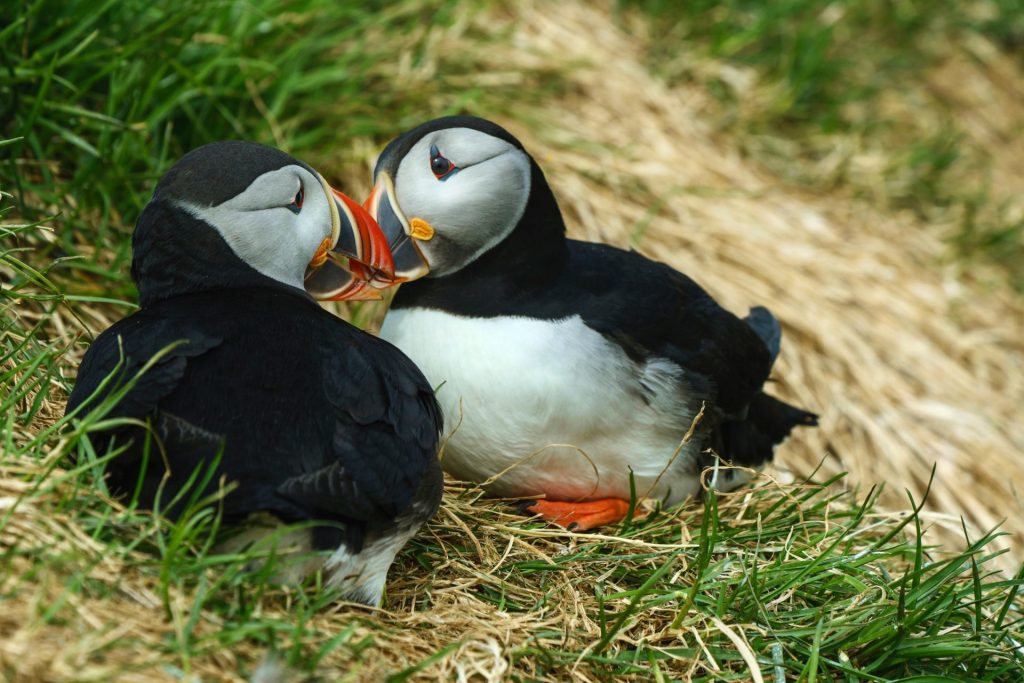
At first glance a puffin looks like a modest little bird. It has black back feathers, a white belly and short, compact wings. But when it turns its head, it reveals the feature that has made it one of Iceland’s symbols – a tricolored, bright red-orange beak, a natural work of art.
In reality, the beak changes color depending on the season. In summer, during the breeding period, it becomes intensely red and orange – this is when puffins look their most spectacular and when tourists most love to photograph them.
Why South Iceland?
Although puffins live in many parts of the island, the south – especially the areas around Dyrhólaey, Reynisfjara and the cliffs near Vík – has become their unofficial kingdom.
They thrive there for several reasons:
- safe cliffs – perfect for digging burrows where they lay their eggs;
- rich fisheries – cold currents bring shoals of herring and mackerel, the puffins’ main food;
- little human disturbance – the harsh, windy climate gives them peace and plenty of space.
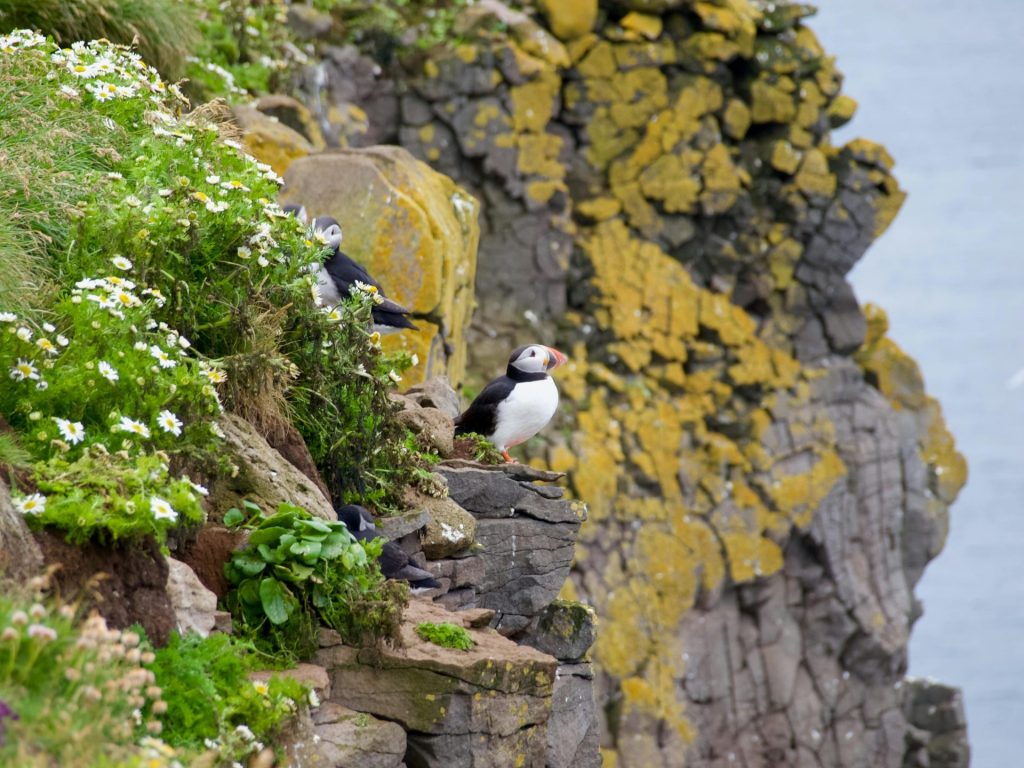
During the breeding season, from May to August, thousands of these birds gather in South Iceland. At dawn they appear above the cliffs, fly low over the heads of observers, and return with fish in their beaks to feed their chicks.
Aerial acrobats, ocean sailors
Despite their somewhat clumsy look, puffins are excellent flyers. Their wings may beat up to 400 times per minute to keep them aloft. Underwater they are even more skilled – diving tens of meters after fish, using their wings like flippers.
This combination of abilities makes them some of the most fascinating birds in the North Atlantic. No wonder they have impressed sailors for centuries and continue to attract nature lovers from around the world.
Meeting a puffin
If you’re planning a trip to Iceland, especially to the southern coast, it’s worth setting aside at least one day to watch these remarkable birds. The best times are early morning and late evening – that’s when puffins return from fishing and can be observed most easily.
The sight of a small black bird with a fiery red beak perching on the edge of a cliff above the restless Atlantic is unforgettable. It’s one of those moments that make Iceland feel both wild and magical.