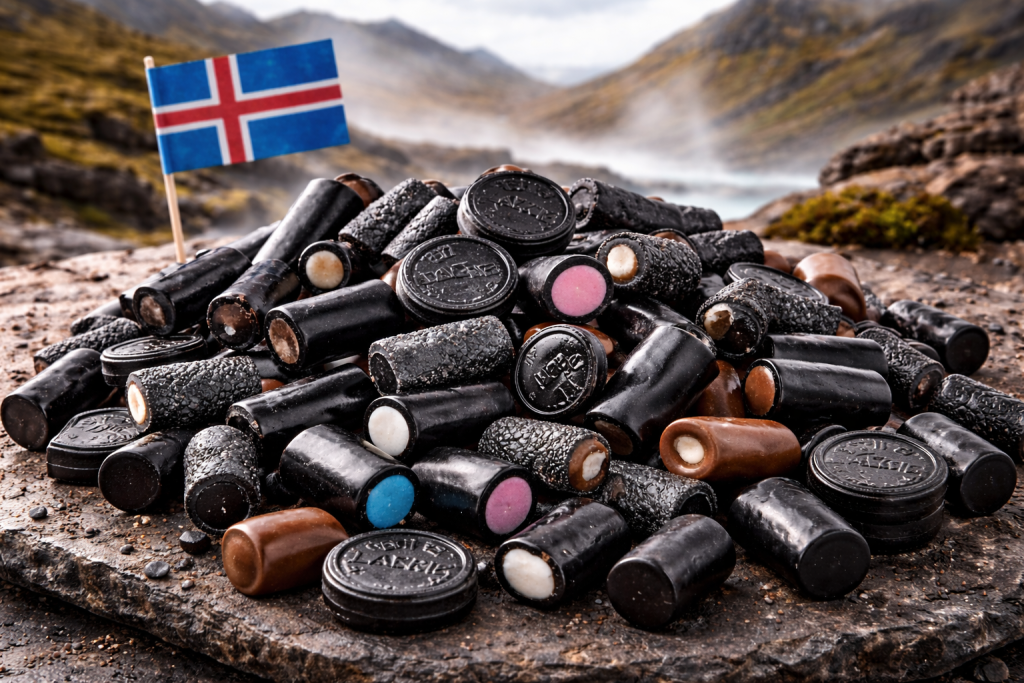
Licorice in Iceland is not just a candy – it’s a cultural phenomenon that permeates daily life, language, and the memories of its inhabitants. For many foreigners, its intense, slightly spicy taste can be a shock. For Icelanders, however, it is the flavor of childhood, family traditions, and northern identity.
It’s hard to find another country where licorice is as ubiquitous as it is here. It’s everywhere: in chocolate, ice cream, cakes, drinks, and even salted caramel. The most characteristic combination, however, is licorice with sea salt – a duo as natural to Icelanders as wind and ocean.
A Bit of Science Behind It
Licorice, or Glycyrrhiza glabra, contains glycyrrhizin – the compound responsible for its characteristic, intensely sweet flavor (over 30 times stronger than sugar). Glycyrrhizin also gives licorice its specific, slightly “sharp,” herbal aftertaste that sets it apart from other sweets. Research shows that its effects go beyond flavor: for centuries it has been used as a natural anti-inflammatory and cough-relieving remedy. Icelanders quickly connected its medicinal properties with culinary curiosity, sparking a wave of flavor experimentation that continues to this day.

The popularity of this taste did not come from nowhere. The first mentions of licorice on the island date back to the 19th century, when it was imported as a medicinal product. It was used for coughs, colds, and to strengthen the body. Over time, the “medicine” became a treat. In the 1930s, Icelandic confectionery factories began experimenting with their own recipes. The combination of licorice with salty additives turned out to be a hit – perfectly matching the character of the island: raw, strong, and unexpected.
Licorice became a cultural code. When Icelanders travel abroad, they often take a bag of salmiakki with them. When they return, their first purchase at the airport is often licorice candy. This flavor is a link – a reminder of home in its simplest form.
And although for many visitors it is a challenging, sometimes even controversial taste, for Icelanders it holds something magical: a bit of sweetness, a hint of spiciness, a note of the sea, and a memory of times when every good thing came from far away and was worth its weight in gold.
It is in stories like these that the flavors of culture are born – from necessity, from chance, from tradition, and from emotions that eventually weave themselves into a narrative greater than the product itself. Licorice is the best example of this: a flavor that has become a symbol of a place, its people, and their extraordinary northern everyday life.