On the night of January 22-23, 1973, the residents of Vestmannaeyjar woke to a world literally breaking apart. A long fissure opened in the ground at the edge of the town of Heimaey, sending fountains of lava into the air. The eruption of the volcano Eldfell began without warning-only a few hundred meters from people’s homes.
For an island whose life depended on the sea, the danger was absolute. If lava blocked the harbor entrance, Vestmannaeyjar would cease to function as a living community.
Evacuation in a Matter of Hours
By a stroke of luck, a storm the day before had forced nearly the entire fishing fleet to remain in port. Fishing vessels instantly became rescue ships. In a single night, about 5,200 people were evacuated. Roughly 500 remained on the island-emergency services, firefighters, and volunteers.
Fighting the Lava
Ash buried rooftops, while lava advanced relentlessly toward the harbor. About one third of the town’s buildings were destroyed or buried. Then Icelanders made a decision without precedent: they began cooling the lava with seawater.
Millions of tons of water were pumped directly onto glowing lava flows. The operation was dangerous, but it worked-the lava slowed, and the harbor entrance was saved. Ironically, after the eruption the harbor was better protected than before.
A City Under Ash
The eruption lasted nearly five months. When it ended, Heimaey looked like a blackened battlefield. Streets had vanished, houses were buried up to their windows, and the landscape had changed forever. Yet the island had also grown-lava had created new land.
This was the end of the first act of the story. The second unfolded on the mainland.
Life in Exile
5,200 islanders suddenly became refugees. They scattered across Reykjavík and other towns, living with relatives, in schools, sports halls. Children changed schools mid-year. Fishermen, whose lives revolved around the sea, suddenly found themselves landlocked.
Every evening, radios broadcast updates from Heimaey. People listened, imagining their homes under ash, their boats in the harbor. Some returned secretly during the eruption-despite the danger-to check on property or rescue belongings. The emotional toll was immense.
The Return
When the eruption finally stopped in June, the return began. What they found was unrecognizable: their town buried under 15 meters of ash in places. Excavation took months. One house after another emerged from the gray dust-some intact, others just memories.
400 houses were completely destroyed. But the spirit wasn’t. People rebuilt on the new land created by lava. Eldfell became both destroyer and creator.
Heimaey Today
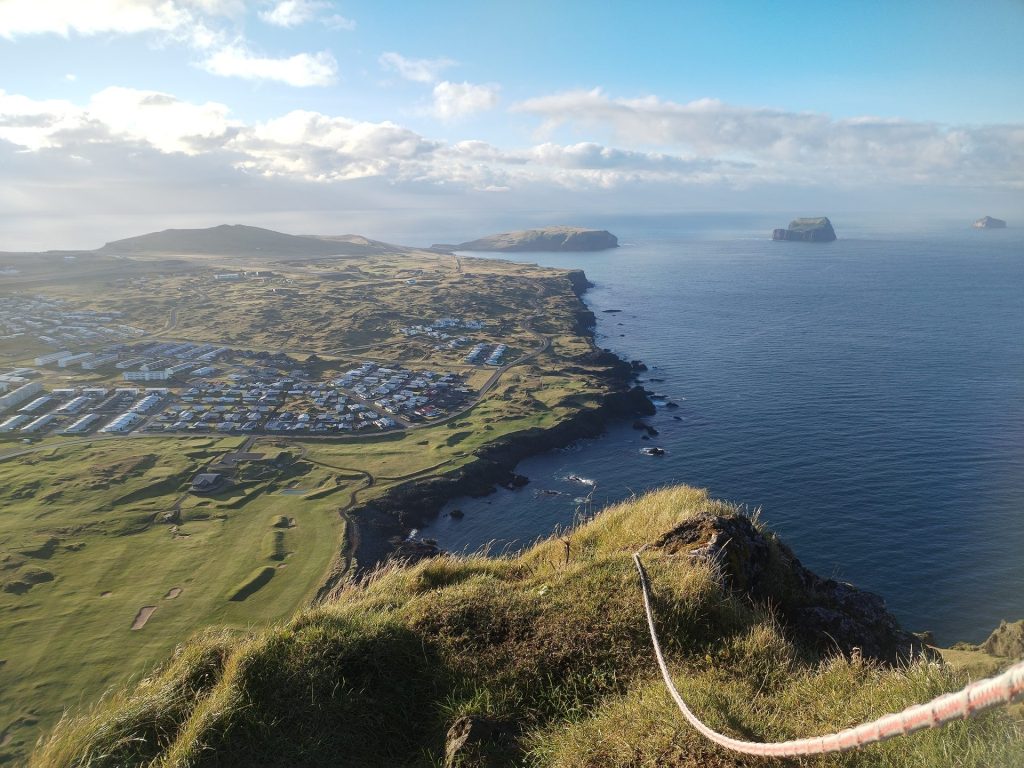
Walk Heimaey today and you’ll see the scars-and the triumph. Climb Eldfell for panoramic views of the crater that nearly erased a town. Visit Eldheimar, the museum built around a house preserved under ash-furnished, with toys on the floor, as families left it.
The harbor, once threatened, now welcomes more ships than before. The population returned to normal. Annual festivals celebrate the “miracle of Heimaey.” New generations grew up hearing stories of that night when fishing boats became arks.
Why Visit?
Heimaey isn’t just a volcanic island-it’s proof of human tenacity. Hike the new trails on lava fields. See puffins nesting on cliffs spared by Eldfell. Explore caves formed in a single night. This is Iceland’s raw power and resilience, side by side.
Per aspera ad astra-through hardship to the stars. Heimaey lives it every day.