Þingvellir National Park (also spelled Thingvellir in English) is one of Iceland’s most important sites – not only for its natural beauty but also for its historical and cultural significance. Located about 40 km east of Reykjavík, it stretches across a wide rift valley marking the boundary between the North American and Eurasian tectonic plates. This is one of the rare places on Earth where you can literally walk between two continents – the North American plate lies on one side of the fissure and the Eurasian on the other.
Geology – where the Earth splits open
Iceland lies on the Mid-Atlantic Ridge, a massive tectonic structure running through the Atlantic Ocean. Nowhere is this more visible than at Þingvellir, where the slow-motion separation of the plates can be seen with the naked eye. The plates drift apart at an average rate of about 2 cm per year, gradually widening the park’s cracks, canyons, and valleys.
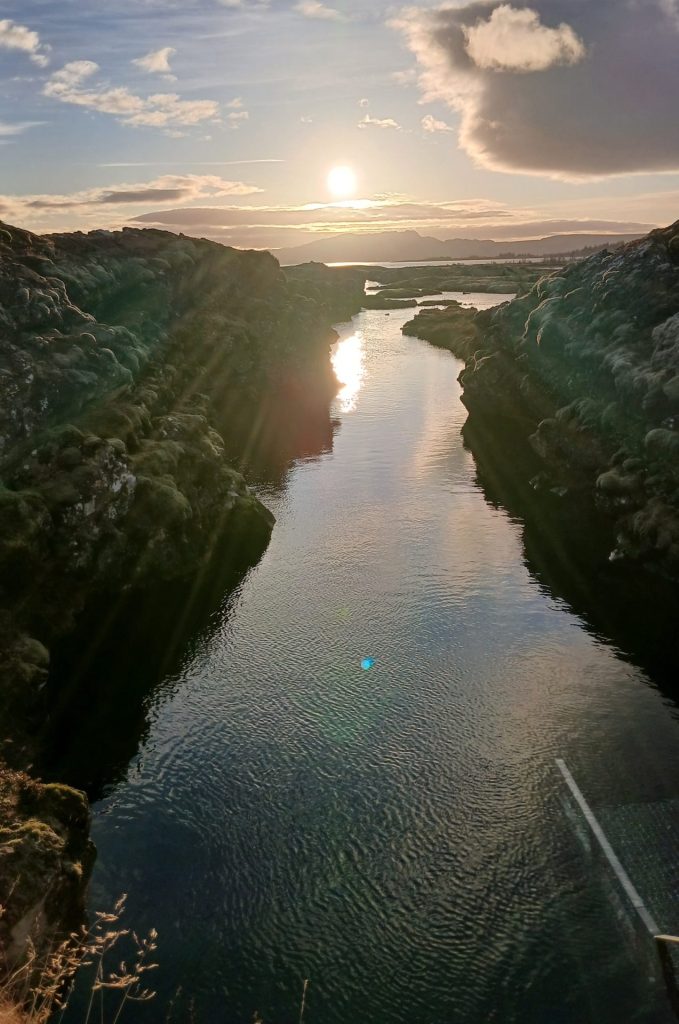
The most striking formation is Almannagjá, a broad gorge with steep rocky walls that visitors can walk through – literally crossing from one tectonic plate to another. In some places, deep rifts are filled with crystal-clear water, creating a surreal underwater landscape.
One of the most famous geological sites is Silfra, a fissure filled with ice-cold, spring-purified water filtered through porous lava rock. Its extraordinary clarity makes it one of the best diving and snorkeling spots in the world – and you can do it between continents.
Öxarárfoss – a waterfall in a rift valley
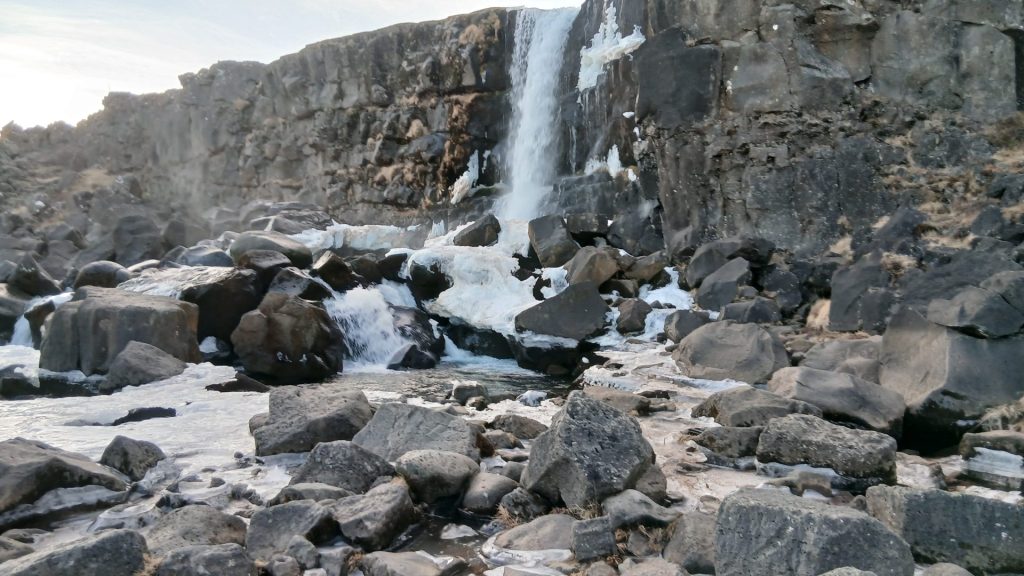
In the northern part of Þingvellir lies Öxarárfoss, a small but picturesque waterfall that cascades over the rocks in a gorge shaped by tectonic activity. Though not large, its beauty and the rugged surroundings make it one of the park’s most beloved natural sights.
History – the birthplace of a nation and democracy
Þingvellir also holds immense historical and cultural value. It was here, in the valley known as Lögberg (“Law Rock”), that the first Icelandic parliament, Alþingi, convened in the year 930 – one of the oldest parliamentary assemblies in the world. Here, crucial decisions about the Icelandic community were made before the parliament was relocated to Reykjavík in 1798.
Many traces of this history remain visible in the park – from ancient stone foundations of meeting sites to stories and traditions about how early settlers governed their society over the centuries
Continental drift in motion
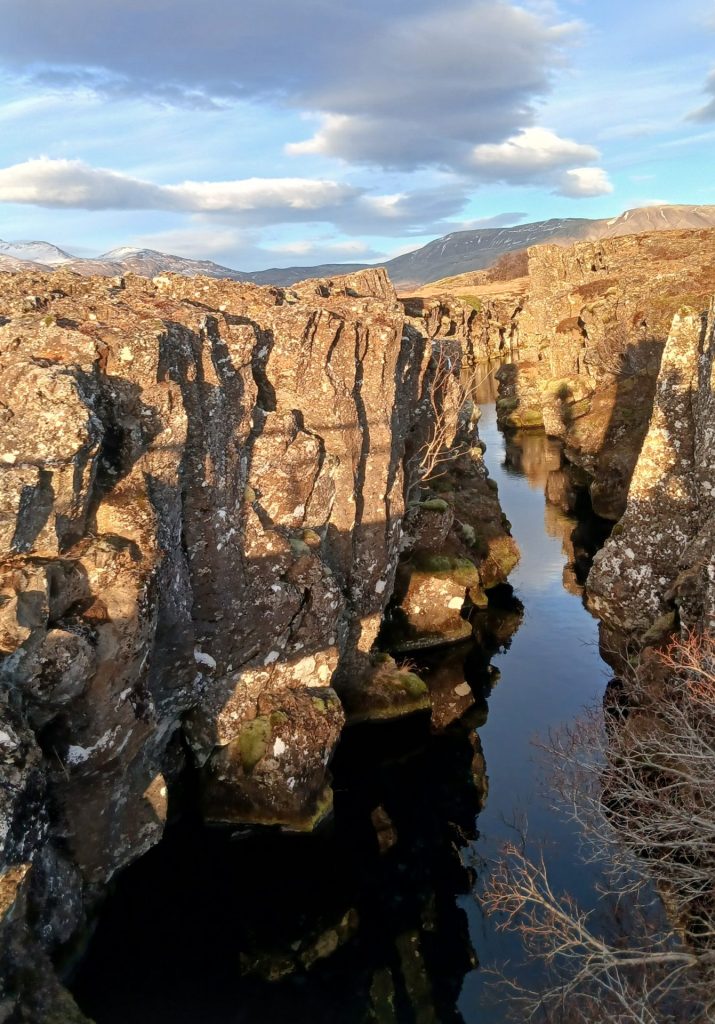
Although the tectonic plates move only a few centimeters each year, their effects on the landscape are dramatic. In Þingvellir, cracks, fissures, and valleys continue to widen, gradually revealing the restless inner workings of our planet.
Why visit Þingvellir?
– Stand between two continental plates.
– Walk along dramatic fissures and rift valleys.
– Dive or snorkel in Silfra’s crystal-clear waters.
– Explore scenic trails surrounded by nature and history.
– Visit the birthplace of one of the world’s oldest parliaments.
Þingvellir is more than a national park – it’s a living chronicle of the Earth and a symbol of Icelandic identity, where every step tells a story of nature, history, and time itself.