For thousands of evacuated islanders, the eruption did not end when the lava cooled. What followed was a life meant to be temporary – one that lasted for months, sometimes years.
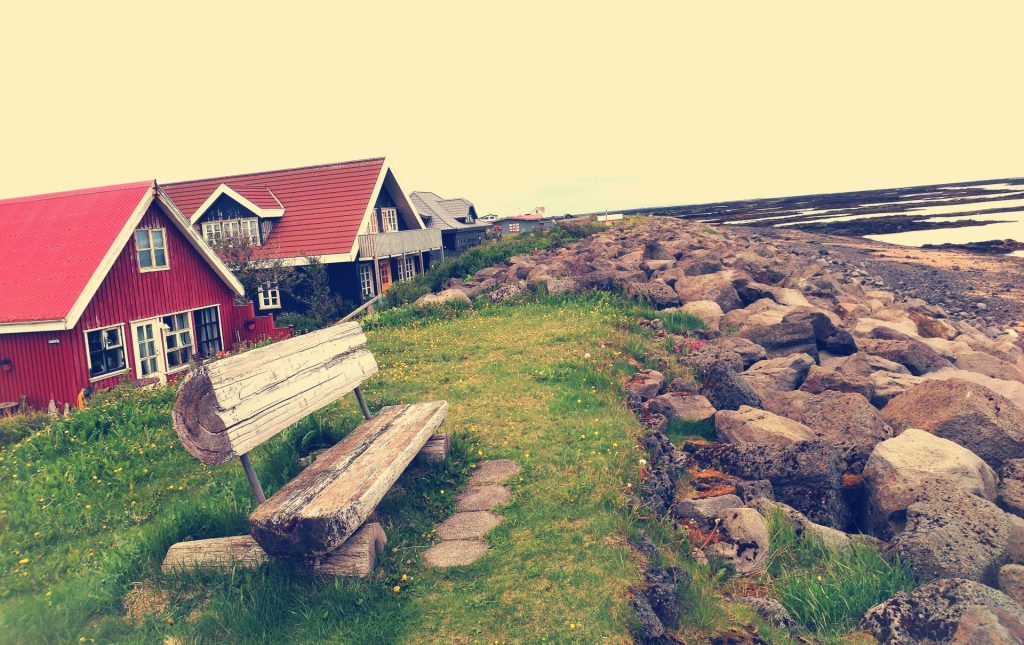
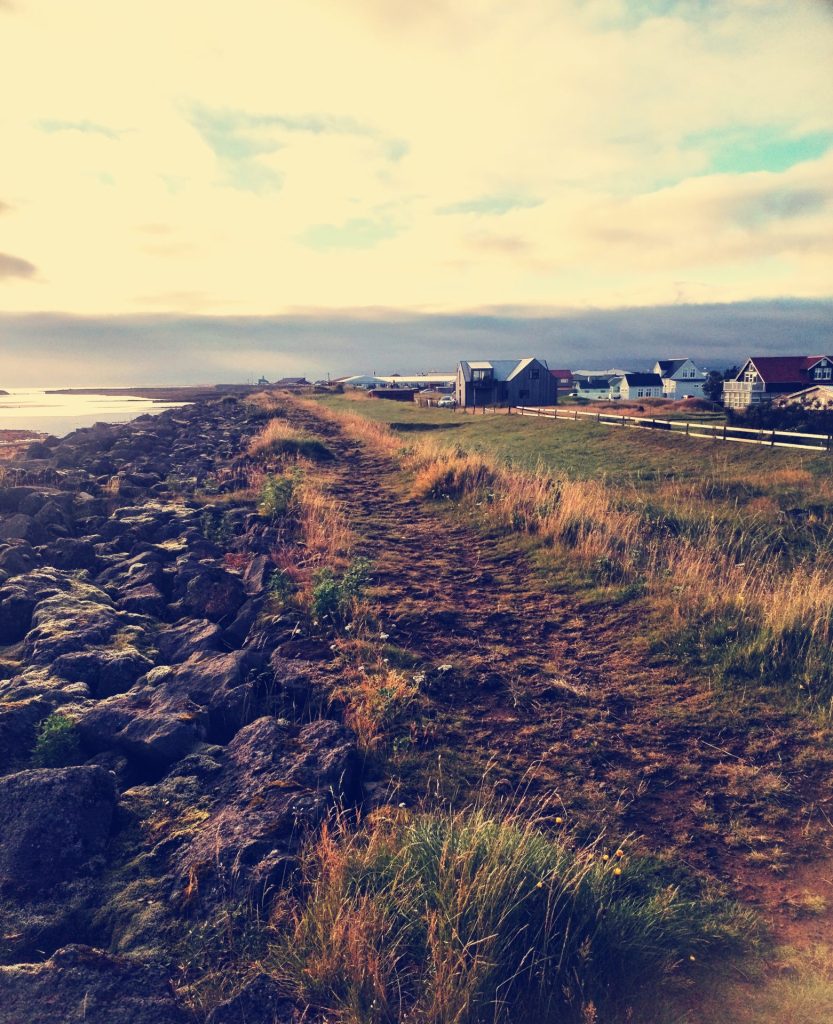
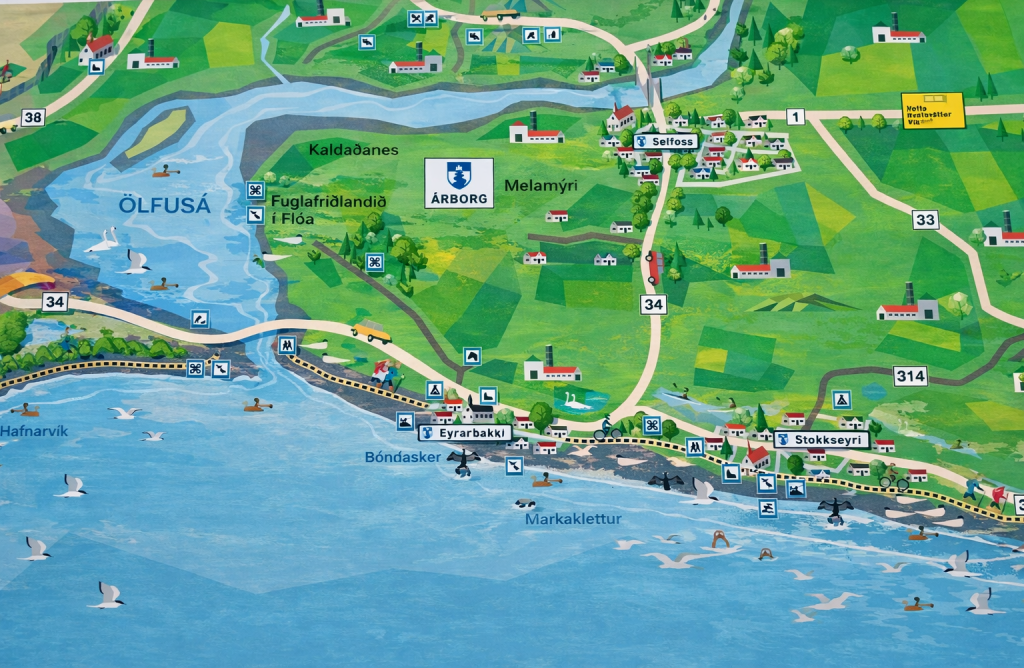
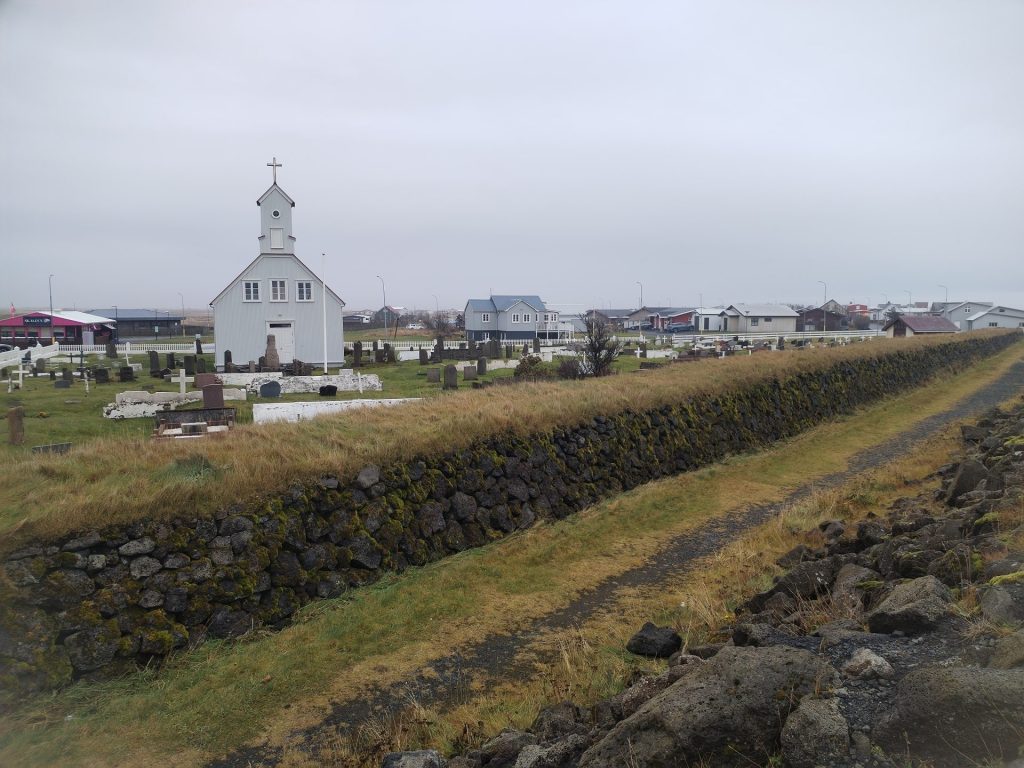
One of the places that received evacuees was Stokkseyri, a small, quiet fishing village on Iceland’s south coast.
A Temporary Home
The state disaster fund imported hundreds of prefabricated houses, placing them in around 30 locations across the mainland. Stokkseyri became one of the points on this map of dispersal for Eyjafólk – “the island people.”Life was safe, but unfamiliar: there was little work connected to the sea, children attended new schools,
adults followed every update from Heimaey. Many later described this time as life on hold – no longer islanders, not yet people of the mainland.
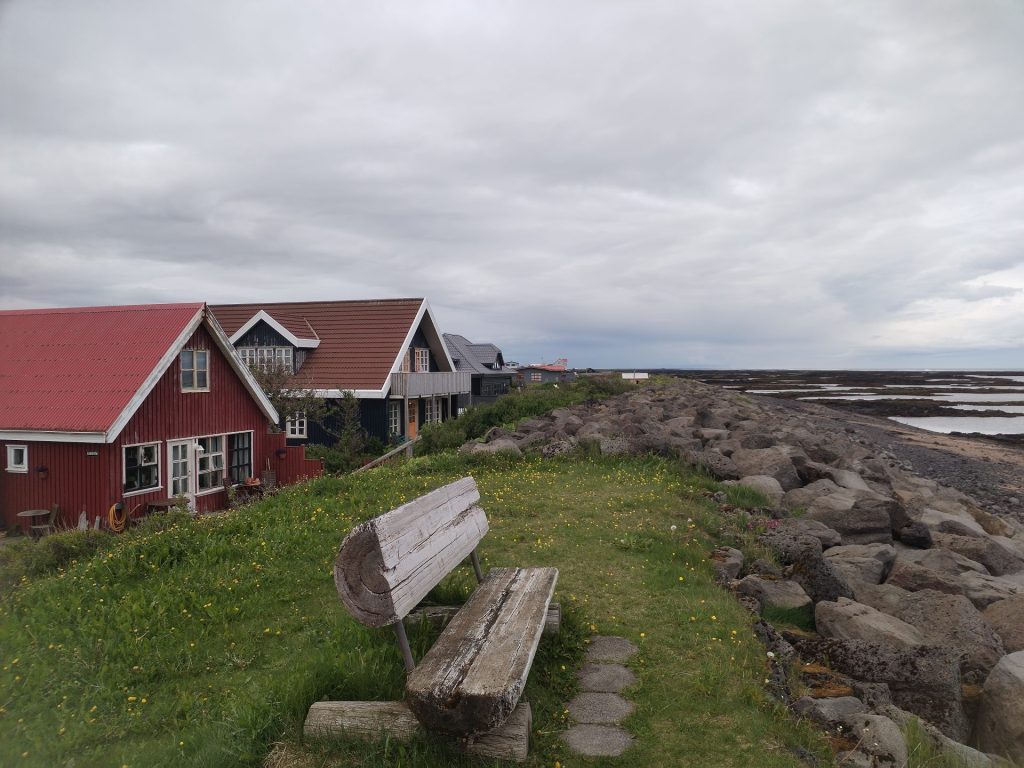
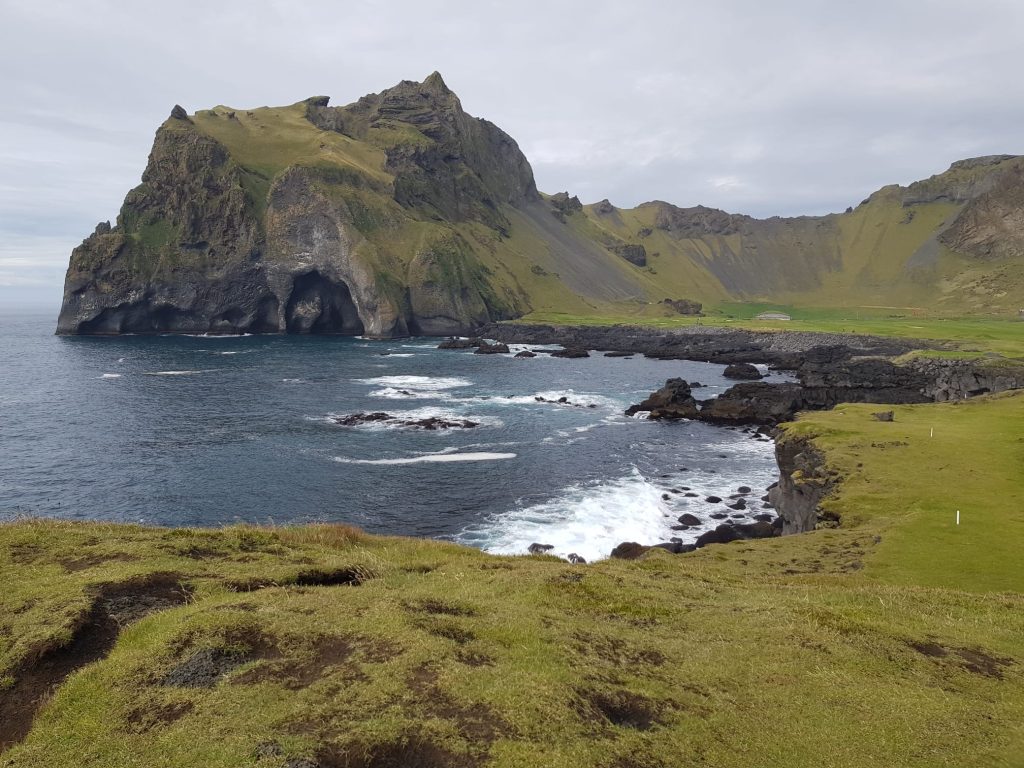
Returning to Vestmannaeyjar. When the eruption finally subsided, the decision was made: the town would be rebuilt. Returns were gradual. Not everyone came back – some families remained in Stokkseyri and other towns permanently. But most did return. Heimaey was rebuilt differently: some districts were lost forever, new houses were designed to withstand ash, solidified lava became part of the town, residual heat from the lava was used to heat buildings. Vestmannaeyjar survived – but it was no longer the same place.
What Remained
For some, Stokkseyri was only a stop along the way.
For others, it became a new beginning.
And for Iceland, the 1973 eruption became a symbol of something rare: that even when the ground splits open beneath your feet, a community can fall apart – and come together again.