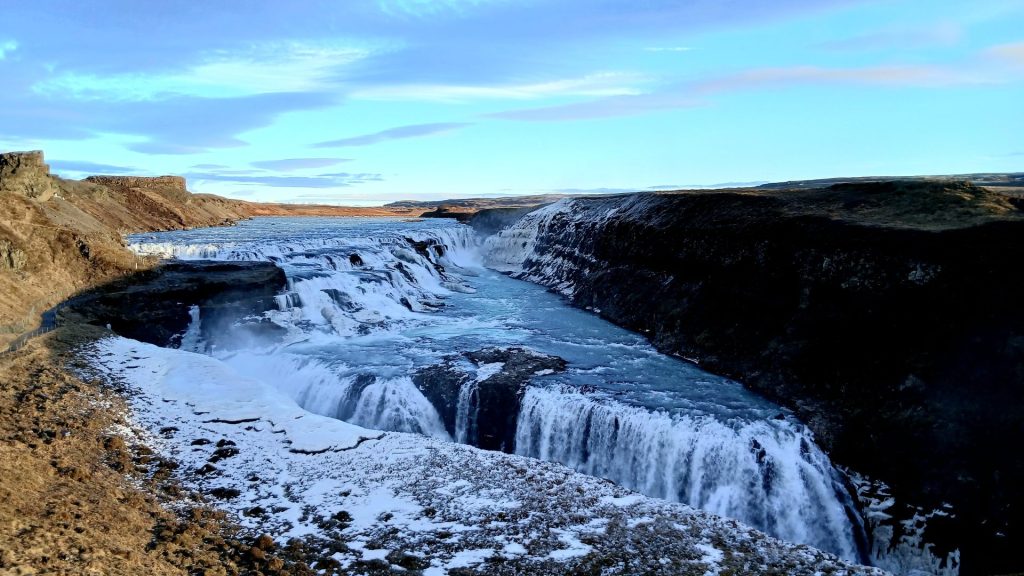
Gullfoss is one of the most recognizable symbols of Icelandic nature and ranks among Europe’s most powerful waterfalls. Located on the Golden Circle route, it captivates not only with its scale and raw beauty but also with the extraordinary story of the fight to preserve it in its natural state.
Hvítá River Waterfall
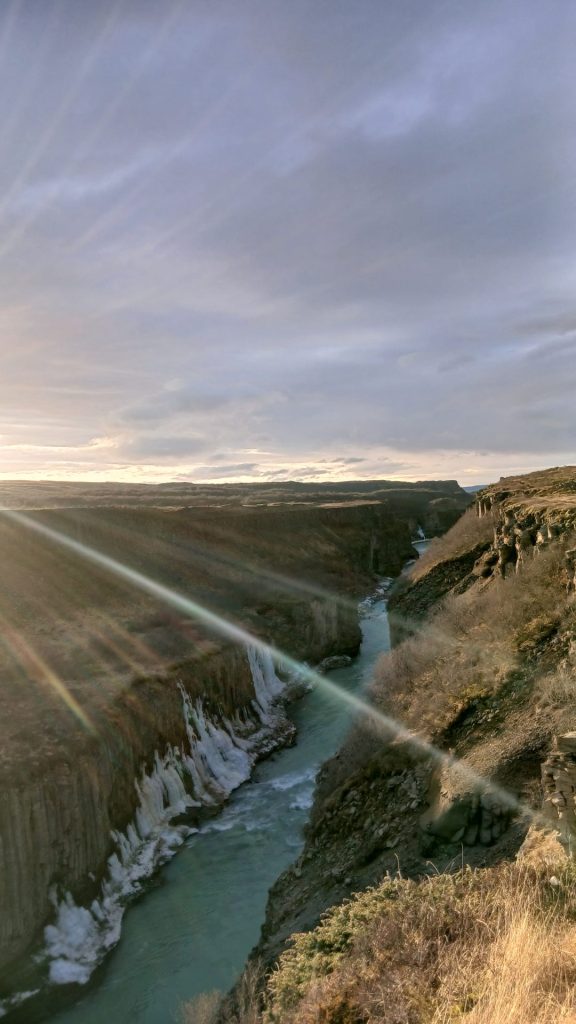
Gullfoss formed on the Hvítá River-a glacial river originating from Langjökull glacier. The waterfall consists of two powerful cascades that plunge sequentially into a deep, narrow canyon. The total drop height is about 32 meters, with an average water flow of around 140 m³/s in summer and 80 m³/s in winter. During major floods, up to about 2000 m³ of water can rush through the waterfall per second.
Thanks to its volume and the force of its current, Gullfoss is considered one of Europe’s largest and most impressive waterfalls, with its roar and ground vibrations felt from a great distance.
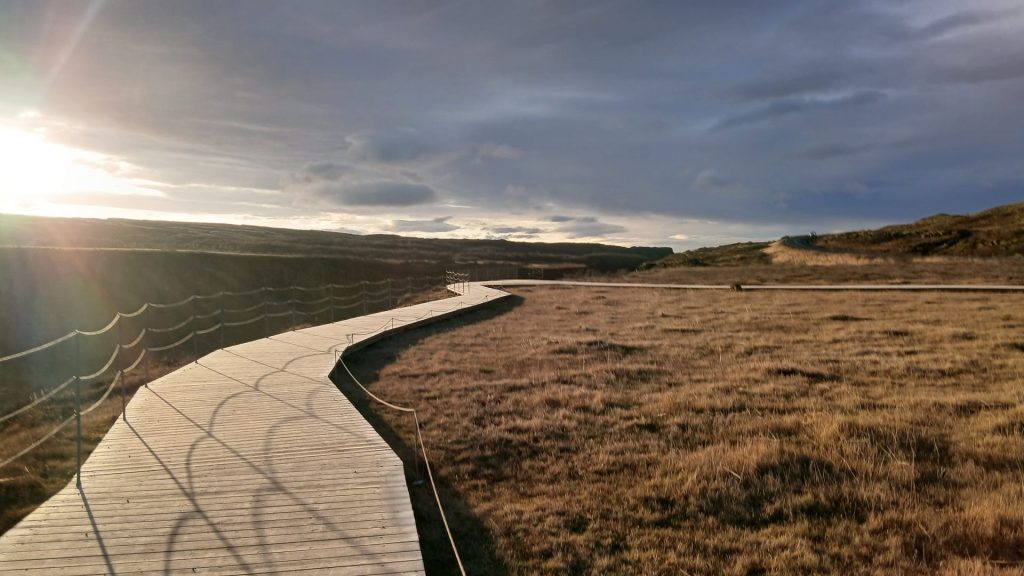
The Woman Who Saved Gullfoss
In the early 20th century, plans emerged to harness the Hvítá River’s energy for a hydroelectric power plant. The project would have significantly altered the river’s natural course and irreversibly changed the waterfall’s landscape.
Sigríður Tómasdóttir, daughter of the landowner on whose property Gullfoss stands, firmly opposed these plans. She was one of Iceland’s first nature conservation activists. In her fight for the waterfall, she was supported by lawyer Sveinn Björnsson, who later became Iceland’s first president.
Sigríður repeatedly walked the route from Gullfoss to Reykjavík to attend meetings and hearings about the planned power plant. In an era when travel was difficult and time-consuming, her determination was extraordinary. Legend has it she even threatened to throw herself into the waterfall if the project went ahead.
Her persistence, public pressure, and the investors’ financial troubles led to the abandonment of the power plant plans. As a result, Gullfoss remained almost untouched.
Legacy and Protection
In 1979, the waterfall area was officially protected, and today Gullfoss is one of Iceland’s best-preserved natural sites. A memorial plaque dedicated to Sigríður Tómasdóttir stands at the waterfall, honoring her as a pioneer of the Icelandic environmental movement.
Gullfoss Trivia
- On sunny days, intense rainbows often appear in the canyon, created by the rising water mist.
- The name “Gullfoss” means “Golden Waterfall,” which one theory links to the color of the water illuminated by low sun.
- Gullfoss is sometimes mistakenly called Europe’s largest waterfall-in reality, it’s one of the biggest, but its power and width create a unique impression.
Symbol of Icelandic Approach to Nature
The story of Gullfoss exemplifies how one determined individual can influence nature’s fate. The waterfall has become not only an icon of Iceland but also a symbol of responsible stewardship of natural resources-a principle that forms the foundation of Icelandic identity today.