Christmas in Iceland has a truly unique character, blending Christianity with deeply rooted folk traditions. The long winter nights, cold winds, and rugged landscapes have filled Icelandic Christmas tales with magic, humor, and a touch of darkness. The most recognizable figures of this festive season are the Jólasveinar – the 13 Yule Lads, often compared to Santa Claus, though their role is far less conventional.
Who Are the Icelandic “Santas”? – The 13 Yule Lads
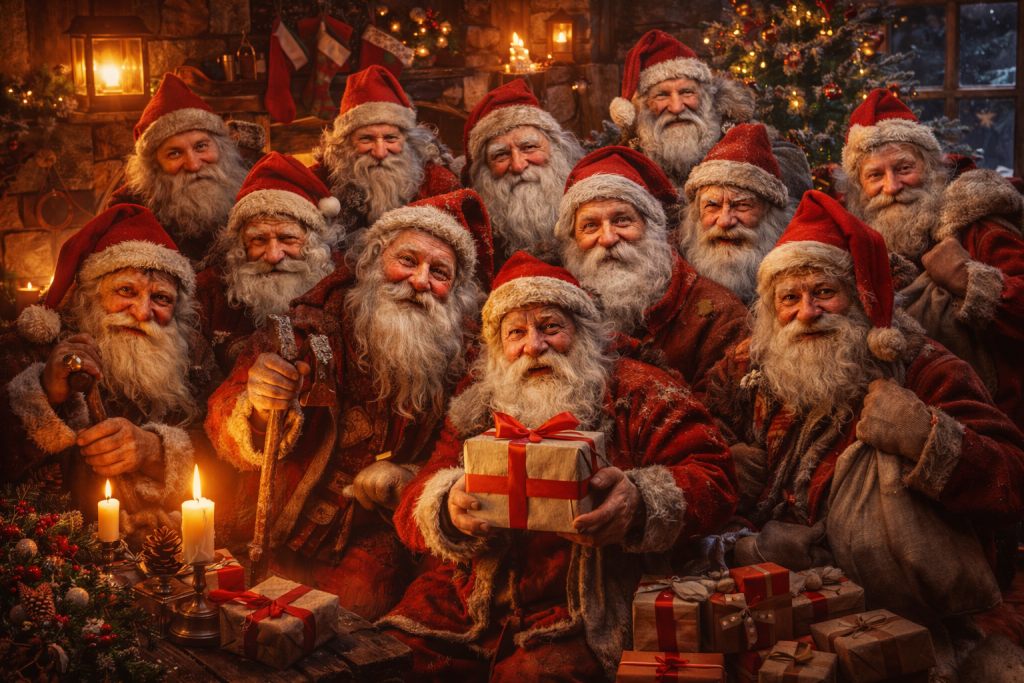
Unlike in most countries where a single Santa Claus delivers gifts, Iceland has thirteen mischievous Christmas lads known as the Yule Lads or Jólasveinar. According to tradition, they descend one by one from the mountains between December 12 and 24, each bringing their own peculiar habits and quirks:
- one steals sausages,
- another slams doors,
- one licks spoons,
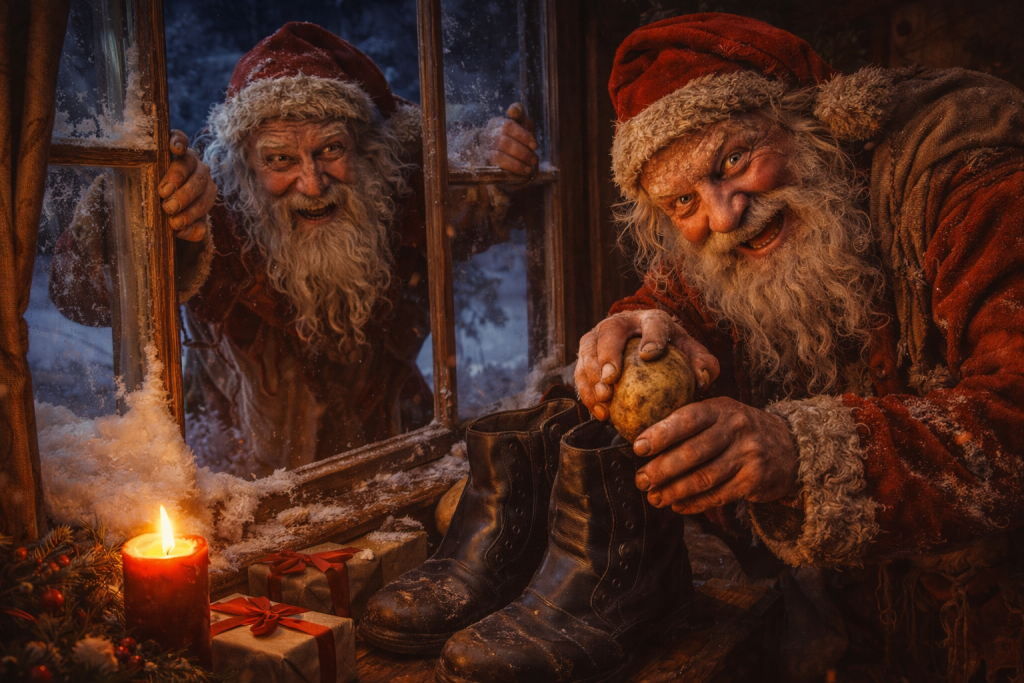
- another peers through windows.
Their Icelandic names reveal their nature:
- Hurðaskellir (Door Slammer) – loves slamming doors late at night,
- Gluggagægir (Window Peeper) -sneaks around to look through windows,
- Askasleikir (Bowl Licker) – hides under beds to lick leftovers from bowls,
- Ketkrókur (Meat Hook) – uses a hook to steal meat,
- Þvörusleikir (Spoon Licker) – can’t resist any spoon he finds.
Far from the kind and jolly image of Santa Claus, these characters were once meant to frighten children into behaving well. Over time, their image softened; today, they’re regarded as playful and humorous figures, eagerly awaited by Icelandic children.
Tradition also says that each lad stays for thirteen nights. After Christmas, they return to the mountains one by one, and the visit of the last lad ends on January 6, marking the close of Iceland’s holiday season.
Shoes in the Window – and a Potato Instead of Gifts
Starting on December 12, Icelandic children place their shoes on the windowsill each night. A Yule Lad visits while they sleep, leaving a small gift or treat in the shoe. Well-behaved children wake up to candies or small presents, while the naughty ones might find nothing but a raw potato.
This humorous detail is a long – standing part of Icelandic folklore, once meant as a gentle warning to encourage good behavior – and still enjoyed with amusement in modern families.
The Yule Lads’ Family: Grýla, Leppalúði, and the Christmas Cat
The Yule Lads have a rather peculiar and slightly terrifying family that comes straight from Icelandic legend.
Grýla
She is the mother of the thirteen Yule Lads – a gigantic troll who descends from the mountains in winter to capture and eat naughty children. Grýla appears in Icelandic writings as early as the 13th century, long before Christmas was celebrated in its modern form. Her story served as both a warning and a moral tale during harsh northern winters.
Leppalúði
Grýla’s husband, Leppalúði, is depicted as lazy and passive, often appearing merely as background to his wife’s terrifying deeds.
Jólakötturinn – The Christmas Cat
The Christmas Cat, or Jólakötturinn, is another legendary creature. According to tradition, this enormous, fearsome cat would “eat” anyone who didn’t receive new clothes before Christmas. The myth served as a reminder of the importance of working hard – those who didn’t help with chores during autumn would go unrewarded. Today, the Christmas Cat is seen with a smile, often featured in decorations and stories told to children.
Unique Christmas Traditions Worth Knowing
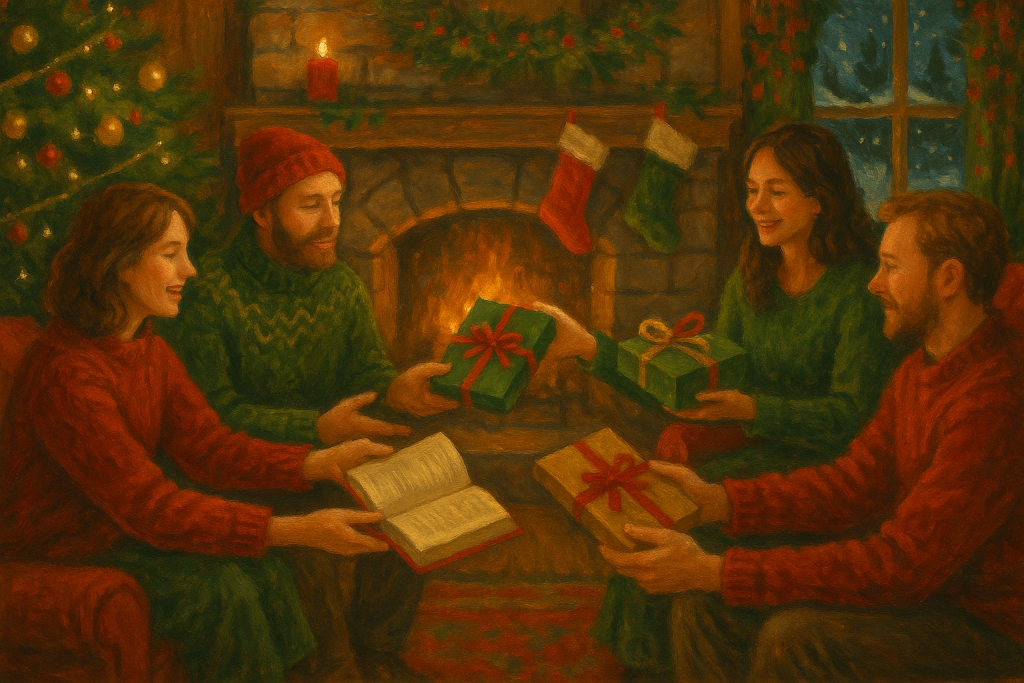
Although modern Icelandic Christmas is calm and family-centered, many ancient customs have survived in milder forms. One of the most beloved is Jólabókaflóð, the “Christmas Book Flood.” Each December, countless new books are released, and Icelanders exchange them as gifts, spending Christmas Eve reading together with a warm drink by the fire.
Holiday meals often feature traditional dishes based on fish or lamb, such as roasted lamb, cod, or catfish. Decorations are inspired by folklore – candles and lights brighten the long winter darkness, continuing an age-old Icelandic tradition of warding off the night with warmth and light.
Icelanders and Their Love for Christmas
Icelanders truly love Christmas. In many homes, decorations appear early – sometimes right after Halloween or the November holidays. Lights, candles, and garlands fill every window, illuminating even the darkest December days. It’s more than decoration: it’s a way to defy the darkness and build an atmosphere of anticipation that many consider the best part of the entire season.
Compared to most European countries, the Christmas spirit in Iceland begins noticeably earlier, turning cities and towns into glowing beacons of light and joy throughout the winter.
Christmas in Iceland Today – Warmth Amid Winter Darkness
Modern Icelandic Christmas seamlessly blends old folklore with family traditions and contemporary celebration. The Yule Lads, their monstrous mother Grýla, her husband Leppalúði, and the Christmas Cat are now told with humor, but their stories remain part of the nation’s cultural identity. The combination of glowing lights, the scent of festive dishes, the joy of Jólabókaflóð, and tales from the mountains create a holiday atmosphere that is truly one of a kind – magical, heartwarming, and deeply Icelandic.